
News & Publications Keep Updated On All Things Space

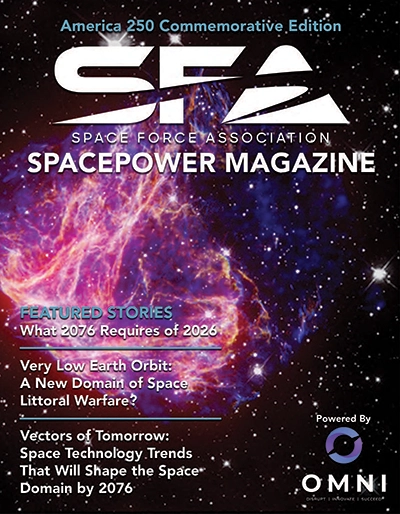
Spacepower Magazine: Winter 2025 Issue

Spacepower Conference 2025

Featuring:

🔹A message from President & CEO, Bill “Hipppie” Woolf, on the 3rd annual Spacepoer Conference.

🔹 In, “The Warfighter Ethos: The Beating Heart Driving SSC’s Internal Transformation,” USSF Lt. Gen Phil Garrant explains how the SSC works toward the mission of fighting & winning in space.

🔹 SSC Director, Col. Timothy Trimailo, explains COMSO and how it’s working to integrate commercial speed, flexibility, and innovation into all mission areas.

Check out Our YouTube Channel

Most people have never heard of the Air Force Research Laboratory. The Space Force couldn't exist without it.

Dr. Andy Williams has been at AFRL since 2003, long enough to watch the space domain go from what he calls a "relatively benign environment" to a fully contested warfighting domain. He now serves as AFRL's Deputy Technology Executive Officer for Space: the single point of contact between the lab and the U.S. Space Force, responsible for making sure the science that starts on a whiteboard at Kirtland actually ends up in a Guardian's hands.

He's the conductor. And in this conversation, recorded live on the Redwire Stage at the 41st Space Symposium, he and SFA Founder Bill Woolf trace the full pipeline, from basic research to operational capability, and don't flinch on where it breaks.

In this episode:

* Why Dr. Williams says space is now more important to the joint fight than air — and what that demands from a research lab
* What the "conductor" role actually looks like day to day, coordinating across AFRL's directorates at the seams, and where the baton gets dropped most often
* How a service still defining itself translates operational gaps into concrete research priorities — and why the only model that works treats S&T, acquisition, and operators as one team
* What always gets cut first in a resource-constrained environment, and why that's a problem that compounds like debt
* The ROSA story: three attempts, a decade of basic research, new materials no one planned to develop — and what it teaches about what it actually takes to get a technology across the finish line for the Space Force
* Why science and technology is exactly like a retirement account — and what decades of cuts have cost the service that's supposed to be the most technologically advanced in the world
* Dynamic space operations: the capability Dr. Williams believes could be decisive in future conflict, why the U.S. isn't leading it, and what he means when he says the Space Force needs velocity — not just speed

Recorded at the Redwire Stage at the 41st Space Symposium. Hosted by Bill Woolf

Produced by Ty Holliday

AV by Redwire

Production Support by Omar Mahmoud & Emily Honhart

Dr. Andrew "Andy" Williams is the Deputy Technology Executive Officer for Space at the Air Force Research Laboratory. He serves as AFRL's primary point of contact for the U.S. Space Force, integrating and executing the lab's space science and technology investment strategy and leading engagement across DoD, the Intelligence Community, NASA, industry, and academia. He has been at AFRL since 2003.

Learn more about the U.S. Space Force: https://www.spaceforce.mil/

Learn more about AFRL: https://www.afrl.af.mil/

Join SFA: https://ussfa.org/

Subscribe for more conversations on spacepower, national security, and the future of the space domain.

Most people have never heard of the Air Force Research Laboratory. The Space Force couldn't exist without it.

Dr. Andy Williams has been at AFRL since 2003, long enough to watch the space domain go from what he calls a "relatively benign environment" to a fully contested warfighting domain. He now serves as AFRL's Deputy Technology Executive Officer for Space: the single point of contact between the lab and the U.S. Space Force, responsible for making sure the science that starts on a whiteboard at Kirtland actually ends up in a Guardian's hands.

He's the conductor. And in this conversation, recorded live on the Redwire Stage at the 41st Space Symposium, he and SFA Founder Bill Woolf trace the full pipeline, from basic research to operational capability, and don't flinch on where it breaks.

In this episode:

* Why Dr. Williams says space is now more important to the joint fight than air — and what that demands from a research lab
* What the "conductor" role actually looks like day to day, coordinating across AFRL's directorates at the seams, and where the baton gets dropped most often
* How a service still defining itself translates operational gaps into concrete research priorities — and why the only model that works treats S&T, acquisition, and operators as one team
* What always gets cut first in a resource-constrained environment, and why that's a problem that compounds like debt
* The ROSA story: three attempts, a decade of basic research, new materials no one planned to develop — and what it teaches about what it actually takes to get a technology across the finish line for the Space Force
* Why science and technology is exactly like a retirement account — and what decades of cuts have cost the service that's supposed to be the most technologically advanced in the world
* Dynamic space operations: the capability Dr. Williams believes could be decisive in future conflict, why the U.S. isn't leading it, and what he means when he says the Space Force needs velocity — not just speed

Recorded at the Redwire Stage at the 41st Space Symposium. Hosted by Bill Woolf

Produced by Ty Holliday

AV by Redwire

Production Support by Omar Mahmoud & Emily Honhart

Dr. Andrew "Andy" Williams is the Deputy Technology Executive Officer for Space at the Air Force Research Laboratory. He serves as AFRL's primary point of contact for the U.S. Space Force, integrating and executing the lab's space science and technology investment strategy and leading engagement across DoD, the Intelligence Community, NASA, industry, and academia. He has been at AFRL since 2003.

Learn more about the U.S. Space Force: https://www.spaceforce.mil/

Learn more about AFRL: https://www.afrl.af.mil/

Join SFA: https://ussfa.org/

Subscribe for more conversations on spacepower, national security, and the future of the space domain.

13 1

YouTube Video VVVaS1dPcFYtMF95WC1ZX05EOHRnYjdBLlN1NU9heEdZcmxz

The Lab Behind the Force: How Military Research Becomes Space Warfighting Capability

Space Force Association May 15, 2026 11:00 am

SFA on Instagram

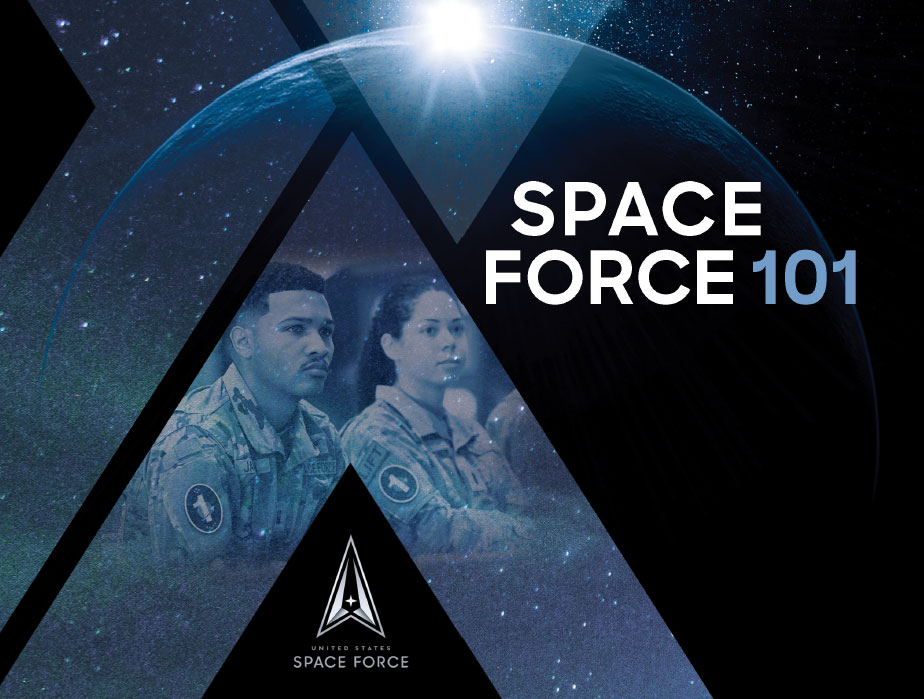
What Is The Space Force?

Just as the Navy maintains freedom of the seas, the Space Force maintains freedom of space for U.S. activities, both governmental and commercial.

Check out the Space Force 101 publication to learn all about this branch of the U.S. military.

In December 2024, the U.S. Space Force celebrated five years of growth, overcoming challenges while achieving significant milestones. This chronology captures the dedication and vision of the service’s founding members—ensuring future Guardians understand the monumental effort behind building the Space Force and the spirit that drives it forward.

You are leaving our site.

You are now leaving Space Force Association’s website and navigating to:.