
In the early days of Red Flag, when the U.S. Air Force finally started training its pilots against a realistic adversary rather than against padded assumptions, something uncomfortable became clear. The first time a pilot faced a thinking enemy, a disorienting number of them lost. Not in actual combat. In practice. That was the entire point. The Air Force had decided it was better to fail at Red Flag than to fail the first time it actually mattered.
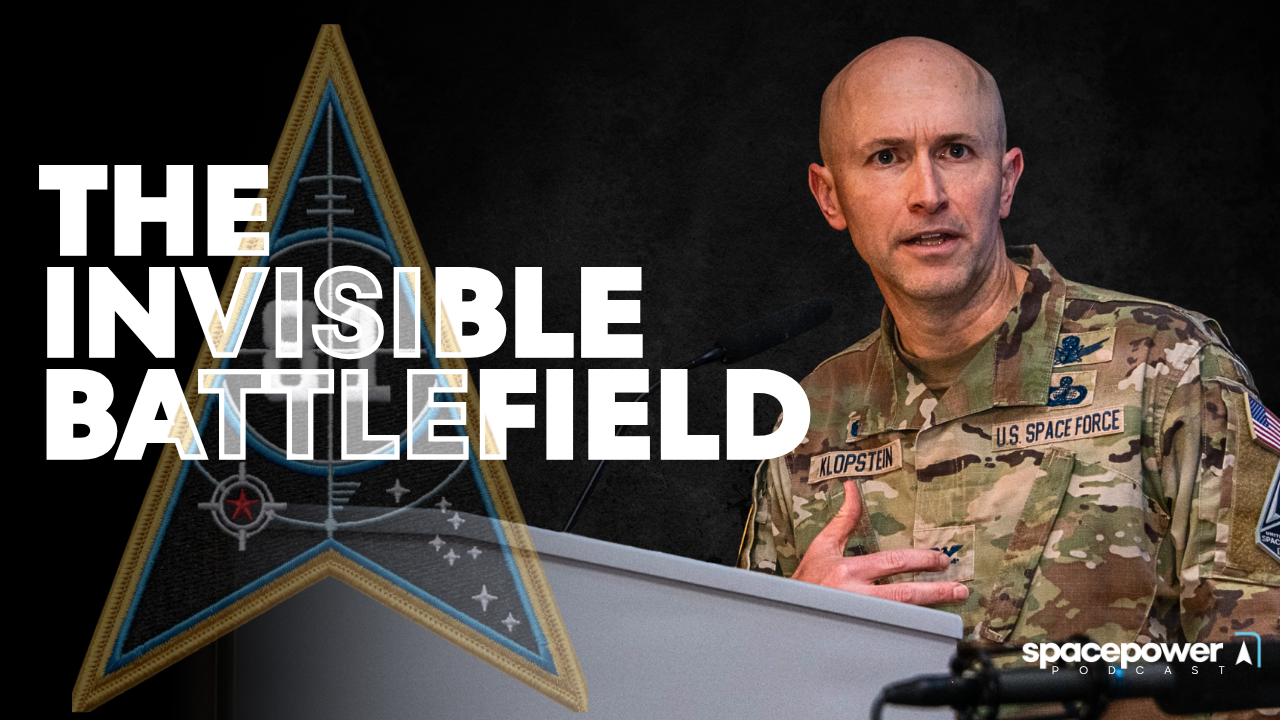
The Space Force is now building its equivalent, and Col. Corey Klopstein is the commander doing it.
System Delta 81, the Space Systems Command unit focused on Operational Test and Training Infrastructure, or OTTI, was activated on September 9, 2025. Its mission is not to deliver a satellite or a communications link. It is to build the proving ground: the simulations, the live on-orbit assets, the sensor networks, and the data infrastructure that let the Space Force test whether a capability survives contact with a real adversary, and train the Guardians who will operate it when one shows up. “The Guardians have to respond to a thinking adversary,” Klopstein says. That sentence is the entire rationale for his organization’s existence.
The Gap OTTI Closes
Klopstein has been at Los Angeles Air Force Base for 13 years, long enough to watch the threat environment transform from something that was rarely discussed in public to something that shapes every decision his team makes. “If you would have said those three words, deny, disrupt and degrade, on my first assignment,” he says, “it was like Beetlejuice, Beetlejuice, Beetlejuice. You know, that wasn’t something that we really talked about openly.”
It is openly discussed now. And the Space Force’s response is not just to build more capable satellites. It is to ensure that every capability it delivers has been tested against the threat environment it will actually face, and that every Guardian operating it has rehearsed against an adversary before the first real event.
That gap existed for a long time. Gen. Saltzman, when he was serving as the Space Force’s J3, put it to Klopstein directly: imagine delivering an F-22 to the Air Force without any training infrastructure or apparatus. “That is what we are talking about,” Klopstein says. “That is what we are doing.” Building OTTI is not a nice-to-have investment in readiness. It is closing the same gap that existed in tactical aviation before Red Flag existed, now applied to a domain where no one has ever fought a full peer contest.
Three Lanes That Have to Function as One
The infrastructure itself runs in three lanes, and the relationship between them is what makes the whole thing work.
The first is digital: high-fidelity simulations of friendly and adversary systems, environments, and effects. These allow Guardians to rehearse scenarios that would be impossible to recreate physically, including adversary actions in contested orbits. The second is physical: real sensors, real surrogate satellites on orbit, and real hardware that allows the Space Force to observe and respond to actual on-orbit activity as a training event. “That environment is only as useful as the data that underpins it,” Klopstein explains. A simulation is only as honest as what feeds it. The physical lane provides that honesty. The third lane is the infrastructure connecting the two, the data architecture, networks, and command and control systems that allow the digital and physical environments to operate as a single training domain.
Saying the Same Thing
SYD 81 is structured differently from most other System Deltas. Rather than pairing with a single Mission Delta, it works across multiple commands simultaneously: Space Training and Readiness Command, Combat Forces Command, and SSC itself. Three commands, one rehearsal. The coordination required is substantial, and Klopstein is frank about why getting it right matters.
He describes going to an international training conference in London and attending a match at Wembley. A customs officer asked if he was going to the football game. He assumed she meant the Manchester City match he had tickets to. She meant the Dallas Cowboys. “When I say football and when you say football,” Klopstein told conference attendees, “we need to be saying the same thing. And we don’t want someone hearing us say football and they think Aussie rules football.” That anecdote is not a detour. It is the point. Building a test and training enterprise where every command, every partner, and every ally is operating from the same operational picture, what Klopstein calls the same sheet of music, is the whole objective. Not after a conflict starts. Before it.
OTTI sits at the convergence of everything the Space Force builds. The satellite communications capabilities, the GPS constellation, the ground systems and the software, all of it must pass through the proving ground before a Guardian is asked to trust it in a real fight. “It is foundational,” Klopstein says, “to whether or not we can actually execute the Chief of Space Operations’ vision and provide the environment, the arena, for us to achieve space superiority.”
To hear Col. Klopstein go deeper on the role of AI in OTTI, what ruthless prioritization looks like for a mission area that is always underfunded relative to its requirements, and how the Space Force is approaching distributed training so every Guardian can rehearse at every level, the full conversation is on the Spacepower Podcast. Hear it in his own words.
Col. Corey Klopstein, Commander, System Delta 81, Space Systems Command Col. Klopstein commands System Delta 81, the Space Systems Command unit responsible for developing and delivering the Operational Test and Training Infrastructure for the Space Force. On his 13th year at Los Angeles Air Force Base, he serves as both the SYD 81 commander and the Portfolio Acquisition Executive and Program Acquisition Executive for infrastructure. SYD 81 works across Space Training and Readiness Command and Combat Forces Command to ensure delivered capabilities are tested against real threats and Guardians are trained to operate them before the first flag event.
Learn more about Space Systems Command: https://www.ssc.spaceforce.mil/ Learn more about the U.S. Space Force: https://www.spaceforce.mil/ Join SFA: https://ussfa.org/ Subscribe for more conversations on spacepower, national security, and the future of the space domain.