This podcast with Col. Hiserote was recorded prior to the anomaly Blue Origin’s New Glenn vehicle experienced on the 28th of May. The National Security Space Launch program is working closely with their Blue Origin partners to help identify the root cause, implement corrective actions, and continue NSSL certification plan efforts.
The satellite had been built. It was certified, tested, and sitting in Florida ready to fly. The rocket assigned to carry it needed more time. And the warfighters waiting on that satellite, the ones counting on the new GPS capabilities it carried, could not afford to wait the usual two years it takes to arrange an alternative.
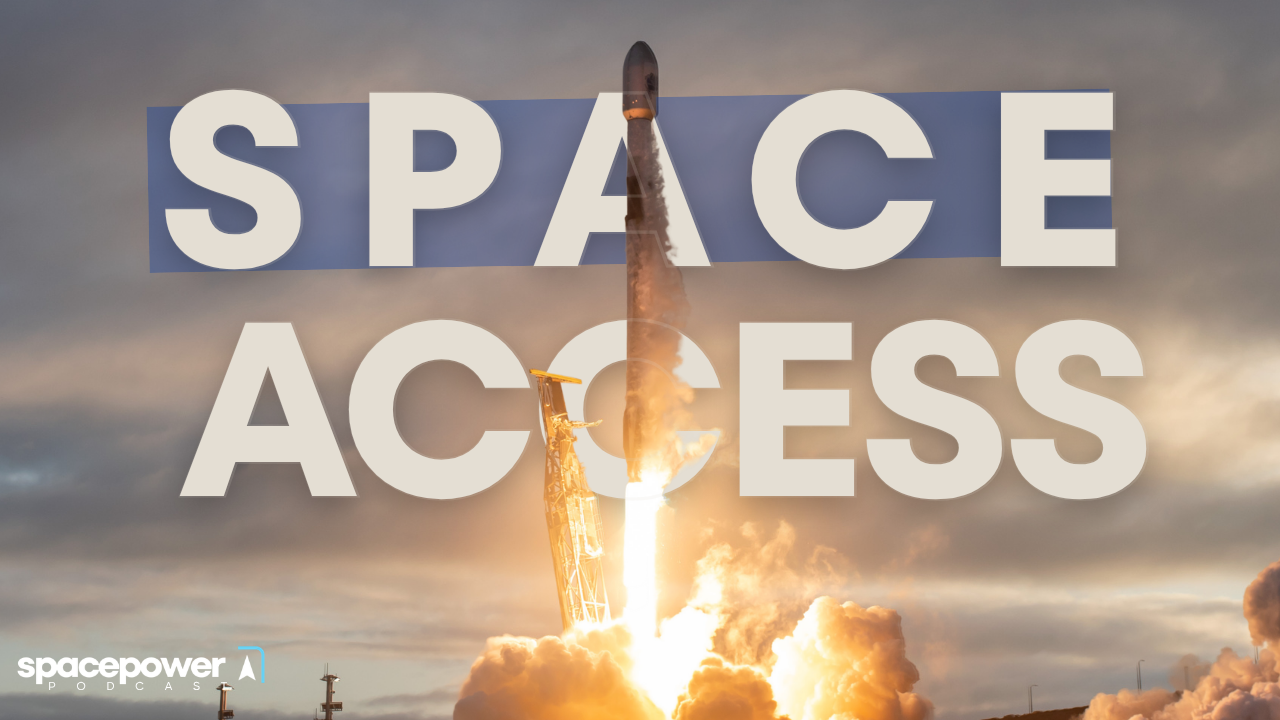
So the team at System Delta 80 did something unusual. They moved the satellite to a different rocket, completed a full recertification, and launched it in about six weeks. “When you consider traditional launch times are more like two years,” says Col. Ryan Hiserote, commander of SYD 80, “to get that done in a month and a half is really an incredible achievement. And it is the fourth time we have done something like this.”
That sentence captures something essential about where the Space Force’s launch enterprise stands in 2026. The vehicles are more capable, the providers are more numerous, and the organization managing it all has been built to move faster than any of its predecessors. System Delta 80, activated October 7, 2025, is the Space Systems Command unit responsible for getting national security space capabilities to orbit, and for what comes after.
The Mission That Starts Everything Else
System Delta 80’s claim is one of the most absolute in the Space Force. “Bottom line,” Hiserote says, “none of our national security space capabilities get off the ground without System Delta 80. Literally, they don’t get off the ground.” Every satellite this mission area touches, from military satellite communications to GPS to the systems that have been tested and trained against real adversaries, all of it begins at the launch pad.
SYD 80 manages four portfolios. The National Security Space Launch program, or NSSL, is the largest by dollar value in the entire Space Force, and Hiserote is dual-hatted as its program manager. NSSL handles the traditional large rocket missions that deliver the most critical national security payloads to complex orbits. The Rocket Systems Launch Program handles smaller rockets, typically carrying test assets, prototypes, and targets for programs like the Missile Defense Agency. The Launch and Test Range Support program develops the next generation of instrumentation for the eastern and western ranges at Cape Canaveral and Vandenberg. And a newer portfolio, Servicing, Mobility, and Logistics, is building the capabilities that will allow the Space Force to operate satellites after they reach orbit in ways that were previously impossible.
Two Lanes, One Strategy
The NSSL structure is built around two deliberately different approaches. Lane 1 invites a growing field of commercial providers to compete for missions where some risk can be tolerated. The purpose is to keep the launch market competitive and to ensure a healthy industrial base of providers. Rocket Lab and Stoke Space were added as Lane 1 providers in early 2025. More are being evaluated. Lane 2 is reserved for the no-fail missions: complex orbits, classified requirements, and payloads so expensive and irreplaceable that the only acceptable outcome is success. “Those are what you might consider our no-fail missions,” Hiserote explains. “Really difficult orbits to achieve, highly complex requirements, and very rigorous certification processes.” The three Lane 2 incumbents have earned their positions through years of that rigor.
The GPS rocket swap illustrates both lanes working in practice. When the Vulcan vehicle needed more time, SYD 80 moved the GPS III satellite to SpaceX’s Falcon 9 under Lane 2. When that swap was made, SYD 80 simultaneously moved a different future mission back to Vulcan, protecting its long-term role in the portfolio. “We still have a lot of faith in that rocket,” Hiserote says. “We prove that by swapping them the USSF 70 mission.” Flexibility does not mean abandonment. It means having options and using them.
A Satellite No Longer Constrained by Its Gas Tank
The most forward-looking part of the conversation is about what happens after launch. For most of the satellite era, a spacecraft’s operational life was determined by the fuel it launched with. When that fuel ran out, the satellite was retired, regardless of how much useful life remained in its systems. A satellite in a predictable, low-fuel orbit is also a satellite that cannot maneuver to complicate an adversary’s planning.
That constraint is now being challenged directly. “You have heard some of my counterparts talk about, if you have a fighter aircraft, you want to be able to fly it as one,” Hiserote says. “You don’t want to be limited on your fuel tank.” SYD 80 has two on-orbit servicing demonstrations planned. The first involves Starfish Space’s Otter satellite, designed to dock with a larger spacecraft and provide two years of maneuvering services. The second involves Astroscale, demonstrating on-orbit refueling in the geosynchronous belt. Gen. Whiting, Commander of U.S. Space Command, has been publicly calling for a maneuver warfare strategy in space, the idea that satellites should be able to reposition, avoid, and act rather than sit in fixed orbits. On-orbit refueling is what makes that strategy executable.
“We are no longer constrained by gas tanks,” Hiserote says. That single sentence represents a fundamental change in what it means to operate in space.
The Team That Launches the Mission
Launch is not a solo event, and Hiserote is emphatic about that. “Rockets are really cool and they look awesome when they take off,” he says, “but they are kind of pointless if there is not a spacecraft on top of them.” SYD 80 is in constant conversation with the satellite program offices across SSC, the Space Development Agency, the National Reconnaissance Office, and NASA. On the operational side, the 45th and 30th Space Launch Deltas are the partners at the ranges, and Hiserote is himself a certified mission director who served as mission director for the two most recent GPS launches.
The picture that emerges from this series of conversations about Space Systems Command is one of an enterprise that is deliberately, structurally connected. A unit builds the communications. A unit defends the navigation signal. A unit ensures everything has been tested before a Guardian trusts it. And a unit gets it to orbit. Each one is paired with an operational counterpart. Each one owns a mission area. And each one, ultimately, depends on the others.
To hear the full conversation with Col. Hiserote, including what the future of space launch infrastructure looks like, how tactically responsive launch fits into the broader picture, and where on-orbit servicing goes next, the full episode is on the Spacepower Podcast. It is the clearest window yet into how the Space Force gets its capabilities into the fight.
Col. Hiserote commands System Delta 80, the Space Systems Command unit responsible for space access, launch, range operations, and on-orbit servicing. He also serves as dual-hatted program manager for the National Security Space Launch program, the largest dollar-value program in the Space Force. A certified mission director, Col. Hiserote personally served as mission director for the two most recent GPS launches.
Learn more about Space Systems Command: https://www.ssc.spaceforce.mil/
Learn more about the U.S. Space Force: https://www.spaceforce.mil/