
By Sophia Skiba
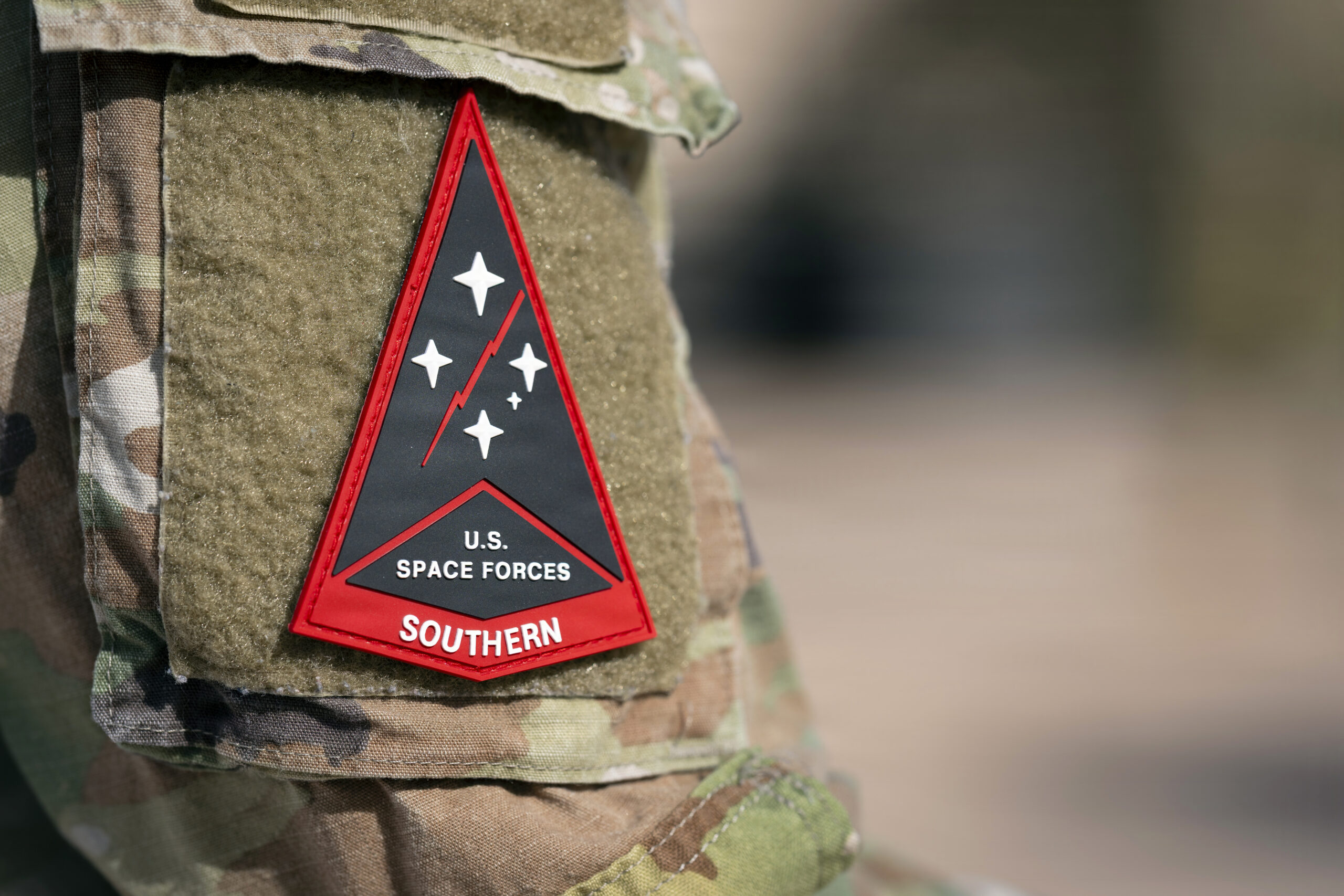
SPACEFOR-SOUTH enters its first blistering summer in Arizona at Davis-Monthan Air Force Base. Despite being less than a year old, the Command has been quick to get intertwined within the space ecosystem of Arizona and South America, currently leading relief efforts to Venezuela, after the nation experienced two devastating 7.5-magnitude earthquakes. Acting Deputy Commander Lt. Col. Benton Enomoto and Chief of Plans Lt. Col. Daniel Morales detail the Command’s efforts. There are no boots on the ground from their base; instead, they support through satellite imagery. With eyes from space, satellites can see how far damage has spread from the earthquakes’ epicenter in Yumare and find aid routes through Venezuela’s dense and rocky forests to more remote locations of impacted communities.
“We’ve been in this exact situation before,” Enomoto said. “Even before the Command’s activation ceremony, Guardians were involved with recovery efforts last autumn when Hurricane Melissa hit Jamaica. Space has always been a part of the mission.”
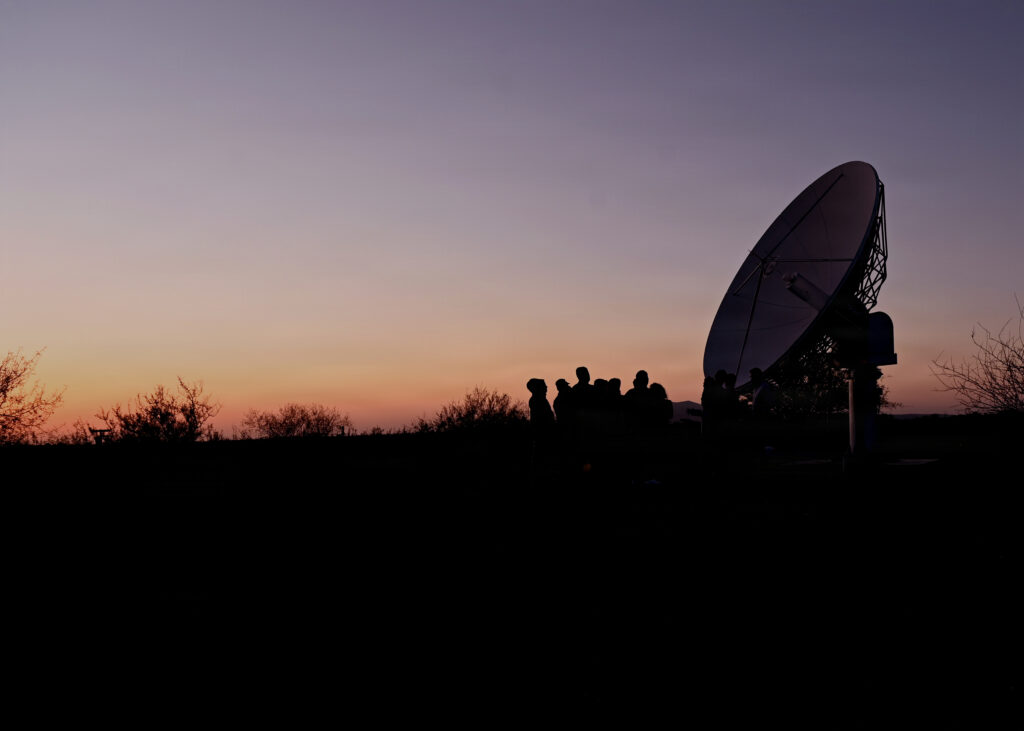
Besides providing natural disaster relief, SPACEFOR-SOUTH is spearheading a partnership program with several nations in South America, sharing optical telescopes and commercial space data in exchange for stability and unity in the atmosphere above. With Kitt Peak National Observatory on the Tohono O’odham Nation hosting more than twenty optical telescopes and two radio telescopes, Arizona has one of the largest gatherings of astronomical instruments in the Northern Hemisphere.
“The goal is to educate and advance our partner nations, many of whom lack the ‘know how’ to leverage space capabilities,” Morales said. “I’ve been to Brazil, Argentina, Ecuador, and will go to more so that this partnership can ensure space competency in the Western Hemisphere. We meet them where they’re at.”
Both Morales and Enomoto have less than a year at SPACEFOR-SOUTH, arriving from recent assignments in Colorado Springs. Both specifically chose to be at SPACEFOR-SOUTH for its mission. Echoing then-Chief of Space Operations Gen. Chance Saltzman’s comments at last year’s Spacepower Conference about treating Guardians as more than a number, every Guardian at Davis-Monthan chose to be there.
“Tucson has been the only place I’ve been where every single person on a command wanted to be there. Everyone was interviewed on why they wanted to be here; the mission resonated with all of them,” Enomoto said.
SPACEFOR-SOUTH recently executed Exercise SALITRE in July, the largest multinational air exercise in South America. Across three continents, SALITRE saw a commercial satellite perform an on-orbit evasive maneuver to a simulated adversary. SPACEFOR-SOUTH led the Joint Commercial Operations, supporting space operators from Chile, Brazil, Colombia, NATO, the Republic of Korea, and all the way to the shores of New Zealand. This round-the-clock coalition watch passed the picture across time zones in a continuous, sun-following rotation.
“This milestone demonstrates that security in the space domain is a team sport,” Col. Brandon Alford, Commander, SPACEFOR-SOUTH, said. “Operating a continuous, multinational watch floor across three continents shows how integrated, resilient, and unified our coalition has become.”
Ever since 2020, the Space Force’s presence has only grown in Arizona. The Space Force’s college nonprofit, the Space Professional Society, has opened its doors this year, now operating alongside the Space Force Association’s Phoenix Chapter, and this May, the University of Arizona has graduated its third batch of Space Force second lieutenants.
Morales has been excited to return to his home state and see its growth in space, especially in the southern part of the state, having been the vice mayor of Douglas in 2018. The best part for him has been being a key figure in SPACEFOR-SOUTH’s relationship with the University of Arizona, being a Wildcat alumnus himself.
On Davis-Monthan, Morales is joined by his wife, Martha Morales. During her first year on base, Martha took up the position of Unit Key Support for the Guardians. Several of the regular processes for Air Force families and spouses don’t share the same language, and every day she encounters Airmen who are shocked to learn they share their base with a Space Force command. Building a Guardian-centric culture for Guardian families with no precedents is full of challenges, but Martha is glad to take it on, she said.
Enomoto is new to Arizona, and his analysis of the space scene is “…one of constant discovery.” He was shocked to see so much space activity away from the space coasts and said that many people were shocked to see that the Space Force is a real military branch. Enomoto entered the military after 9/11, and was one of the first advocates for separating space operations into its own branch. ‘
“Folks who really understood what space could do faced a lot of pushback over the years,” he said. “Now things are different. Now things are better.”