
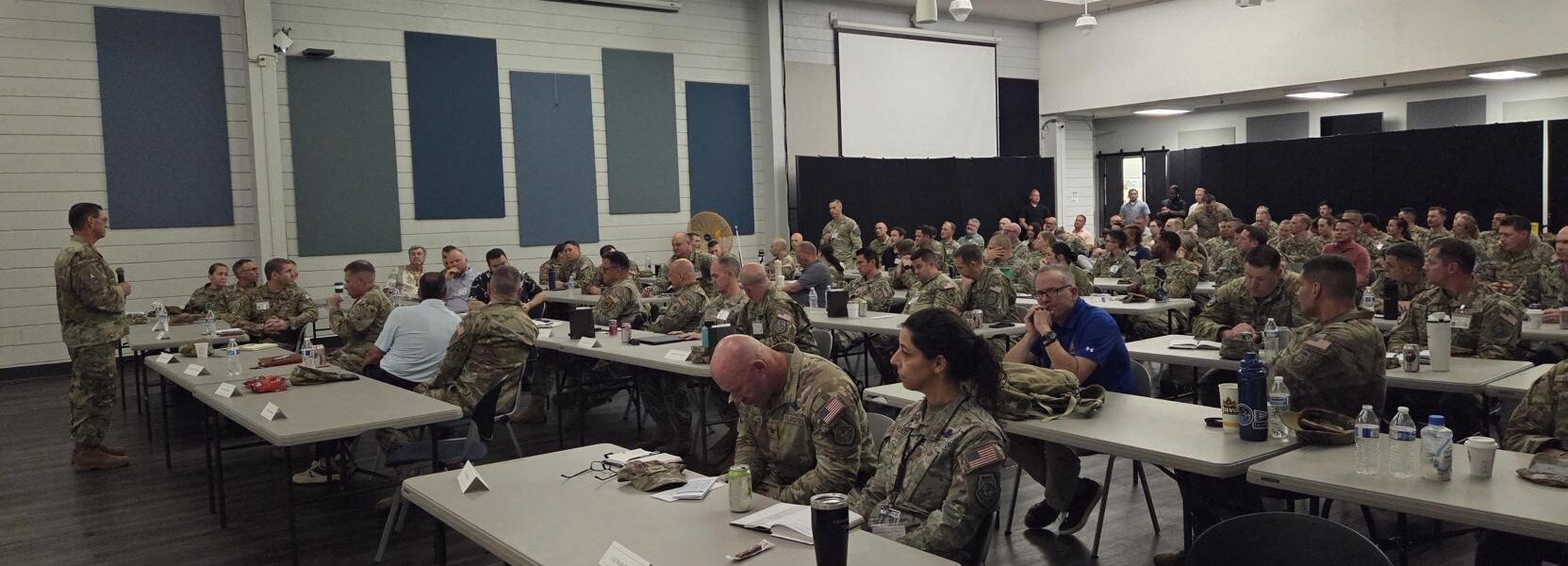
At the 30th Anniversary of the 328th Weapons Squadron, Chief of Space Operations Gen. Chance Saltzman outlined a fundamental transformation underway in the U.S. military, one driven by a simple realization: the space domain is no longer benign.
When the Space Force was established, it inherited systems designed in the 1990s for longevity, not conflict. The guiding philosophy was efficiency. Build as few satellites as possible, make them highly durable, and maximize mission life to offset the high cost of launch. Combat attrition and adversary interference were not central design considerations.
That model no longer works.
Today’s environment demands a force designed for resilience in the face of active threats. Advances in launch and satellite production have enabled a new approach: instead of a handful of exquisite systems, the Space Force is moving toward large constellations of smaller, more affordable satellites, often in low Earth orbit. This shift complicates enemy targeting and improves survivability through distribution.
But redesigning the force isn’t just about architecture; it requires a system to adapt continuously. To that end, the Space Force has introduced a 15-year “Objective Force” planning framework, looking out to 2040. This blueprint will be tested through wargaming, exercises, and simulation, updated annually, and fully reset every five years to ensure it keeps pace with evolving threats.
Equally important is investment in people. Recognizing that future conflicts demand cross-domain fluency, the Space Force has overhauled training. New officers now complete a full year of foundational instruction—far more than in the past—covering space, cyber, and intelligence operations. The goal is to create leaders who share a common language and can integrate across disciplines, improving decision-making in complex environments.
Training is also being rebalanced to prepare for high-end conflict. Historically, operators focused almost entirely on day-to-day missions, leaving little time to train for contested scenarios. The new force generation model creates dedicated periods for high-fidelity training, supported by advanced simulations, ranges, and aggressor forces. As Saltzman noted, executing the daily mission is not enough to prepare for a fight against a peer adversary.
Organizational changes are reinforcing this shift. The creation of Integrated Mission Deltas (IMDs) consolidates responsibility for personnel, training, equipment, and sustainment under a single commander. This alignment ensures accountability for readiness at the operational level.
At the same time, the Space Force has solidified its role in joint operations. By establishing service components within combatant commands, space capabilities are directly embedded into planning and execution. The result has been overwhelming success in current operations throughout the last year and growing demand from a Joint Force that recognizes space is essential to mission success.
Looking ahead, the Space Force is developing a suite of capabilities to contest and control the space domain—protecting U.S. systems while denying adversaries the same advantages. These capabilities are already funded and moving toward operational deployment.
That funding reflects unprecedented growth. The Space Force budget has risen sharply since its creation, signaling broad confidence across the Department of War and Congress. More importantly, it validates that the service has articulated both the threat and a credible plan to address it.
Saltzman’s message was clear: the Space Force is no longer a service provider focused on sustaining legacy systems. It is building a force designed to fight and win in space today and tomorrow.